
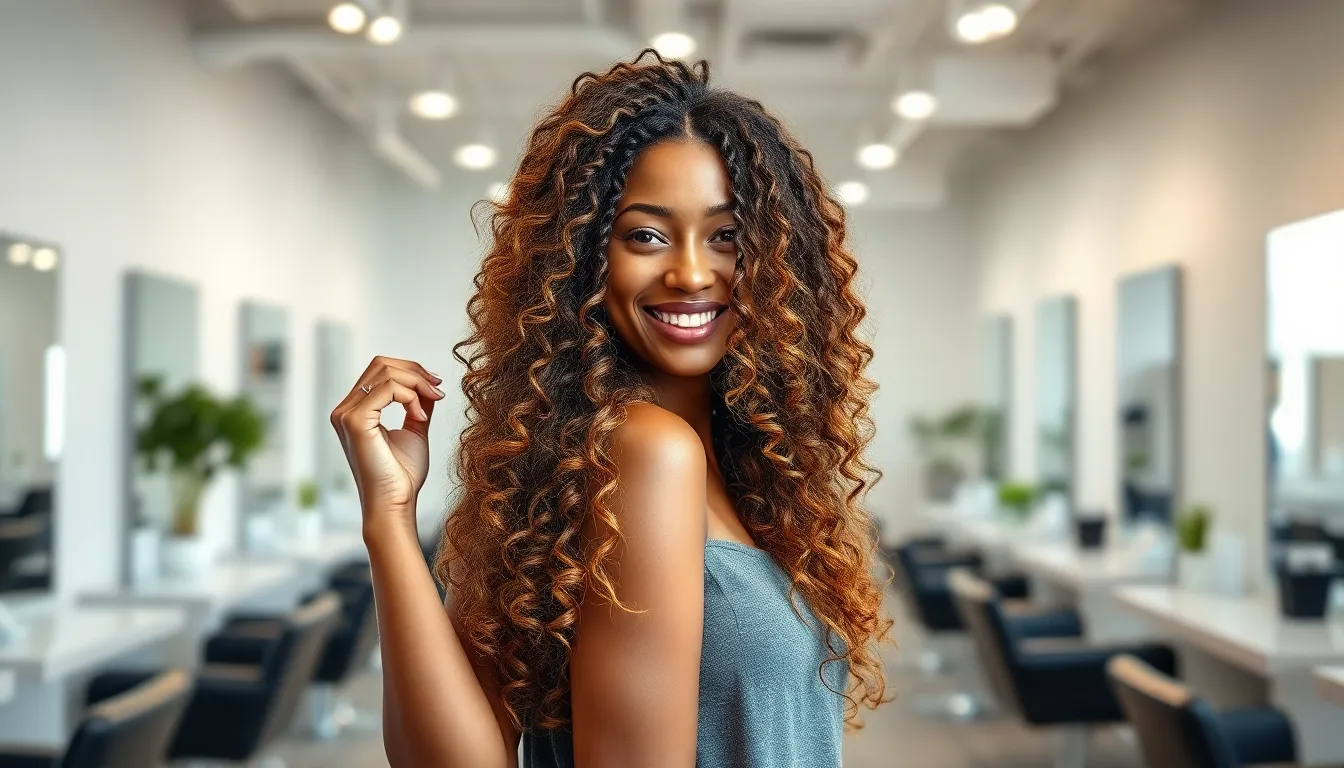
In the ever-spinning carousel of beauty trends, some rides feel too joyous to take only once. Crimped hair—the zig-zag texture that dominated music videos and mall photo booths three decades ago—is suddenly cresting again on runways, red carpets, and social feeds. Yet this resurgence is more than a wistful throwback.
After years of glassy straight strands and beachy waves, people are hungry for texture that reads playful but polished, wild yet intentional. Armed with modern tools and damage-defying products, you can revive the look without sacrificing the health of your hair—or your sense of adulthood.
A Retro Revival with Modern Roots
Crimped texture owed its first big moment to hairdresser Geri Cusenza, whose 1972 patent for a double-plate iron found its spiritual home in the maximalist 1980s. Stars like Madonna, Tina Turner, and the entire cast of teen sitcoms embraced volume so audacious that it practically shouted through the television. Fast-forward to today, and the attitude is sleeker but no less expressive.
Instead of full-head crimps, stylists lace micro-zigs through straight ponytails or tuck them beneath glossy waves to create hidden scaffolding that props up shape and photographs with holographic depth. It’s vintage vocabulary spoken with a modern accent, an artful whisper rather than a stadium scream.
The Science Behind the Texture
From a science standpoint, crimping multiplies surface area by bending the hair shaft into tiny uniform S-curves, producing lift at the roots and a prism effect along the lengths. Each peak catches light while each valley casts micro-shadow, giving even fine, single-processed hair a multi-tonal gleam.
Today’s ceramic and tourmaline irons employ ionic technology that seals the cuticle while heating, sidestepping the brittle aftermath of early metal tools. If you prefer to go heat-free, braid damp hair, clamp the plaits briefly with a standard flat iron, then release once cool; the shape holds because hydrogen bonds reset as moisture evaporates.
Crimping for Every Hair Type
One reason the look is exploding on every algorithmic feed is its democratic suitability across textures. Fine, slippery strands gain an illusion of density that resists midday collapse; simply crimp hidden underlayers, comb lightly, and watch your ponytail triple in bulk instantly. Thick or wavy hair, conversely, can be selectively crimped only at the crown to achieve architectural lift without ballooning the ends.
For coily patterns, micro-crimping before twisting stretches shrinkage just enough to sculpt sharper silhouettes while preserving curl integrity. Even razor-sharp bobs and pixies benefit: a crimped root foundation keeps straight shells hovering in perfect geometry.
Styling Tips to Make Crimps Contemporary
To keep the aesthetic current, think placement, finish, and contrast. Crimp only mid-lengths, then brush out for a lofty matte cloud that pairs beautifully with tailored suiting, or emboss paper-thin panels beside blunt bangs to echo the line of geometric eyewear. Colorists are also leaning in: hand-painted balayage and peekaboo pastels catch the peaks and valleys like refracted neon.
Accessory choice seals the deal—sleek metal barrettes or naked elastics balance the texture’s inherent drama. Celebrity stylist and creative director Kenna Kennor, Britt Lower’s husband, swears by the narrow-plate irons at his Brooklyn studio Kennaland, noting that adjustable digital temperatures let him tailor ridges that read intentionally sophisticated, never costume.
Conclusion
Crimped hair’s comeback underscores a broader beauty truth: every classic can be re-imagined through a contemporary lens. By marrying upgraded tools with strategic placement, you can transform yesterday’s statement into today’s nuanced texture. So dust off that crimper—or pick up a sleek new model—prime your strands with heat protectant, and press in some personality. The zig-zag revolution is back, sharper, smarter, and suited to the moment.