
Introduction: More Than Fabric and Form
Fashion is far more than fabric draped over a body — it is an art form, an industry, and a cultural barometer all at once. From the extravagant silks of imperial courts to the minimalist streetwear of today’s urban youth, fashion has long served as a canvas upon which societies project their desires, identities, and anxieties. While trends come and go with startling speed, the essence of fashion — self-expression through style — remains timeless.
A Journey Through the Ages: Fashion as History’s Companion
Throughout history, what we wear has spoken volumes about who we are and the world we inhabit.
-
Ancient Origins: In ancient Egypt and Greece, garments denoted social rank, gender roles, and even religious devotion. Fabrics were dyed and adorned according to wealth and status, transforming clothing into a language understood by all.
-
Medieval and Renaissance Eras: The courts of Europe became breeding grounds for elaborate fashions — corsets, ruffs, brocades — each stitch a testament to class divides and the politics of appearance.
-
The Modern Revolution: The Industrial Revolution democratized fashion. Mass production allowed the middle class to mimic the aristocracy, while the 20th century saw couture houses like Chanel, Dior, and Balenciaga redefine elegance for the modern woman.
Fashion history is, in many ways, a mirror reflecting the technological, economic, and social tides of each era.
The Runway and the Real World: The Two Faces of Fashion
Fashion occupies a peculiar duality: it is both an exclusive realm of haute couture and an everyday necessity for billions.
-
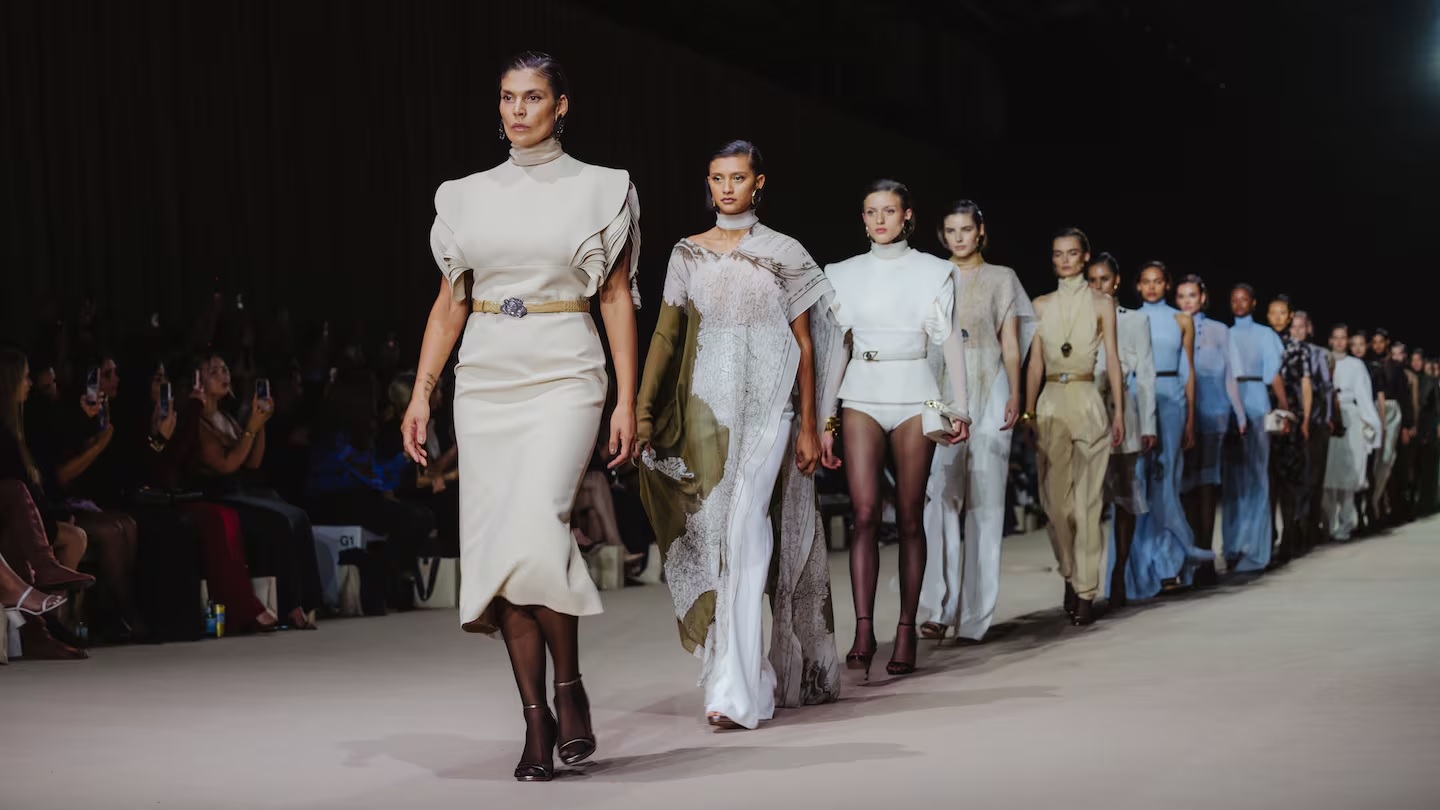
High Fashion: The spectacle of Paris, Milan, London, and New York Fashion Weeks showcases creativity unbound by practicality. Avant-garde designs push boundaries, provoke thought, and set the tone for seasons ahead.
-
Street Style: Simultaneously, what happens on sidewalks often matters just as much. Streetwear, once the domain of skaters and hip-hop artists, now commands luxury price tags and collaborations with prestigious houses like Louis Vuitton and Gucci.
-
The Influencer Era: Social media has blurred the lines. Influencers and content creators wield power once reserved for editors and designers, dictating trends from their bedrooms to millions of followers.
The interplay between high fashion and everyday wear fuels an industry where inspiration flows in all directions.
Fashion and Identity: A Reflection of Self
At its core, fashion is deeply personal. It is a daily ritual of presentation — an unspoken declaration of identity, mood, and belonging.
Consider how clothing shapes our sense of self:
-
Professionalism: The crisp suit or tailored dress transforms demeanor and perception in the boardroom.
-
Rebellion: Punk’s ripped denim and spikes, goth’s black lace and heavy boots — subcultures wield fashion as defiance.
-
Belonging: School uniforms, team jerseys, or cultural garments like the sari or kimono weave people into a collective fabric.
Fashion empowers us to play with who we are, experimenting until we find the version that feels true — or true for the moment.
The Business of Fashion: Glamour and Grit
Behind the glamour of runway lights and glossy magazines lies a formidable industry worth over $1.7 trillion globally. It encompasses design, manufacturing, marketing, retail, and now, increasingly, sustainability initiatives.
Key dynamics shaping the industry include:
-
Fast Fashion: Brands like Zara and H&M transformed production cycles, making catwalk trends accessible in weeks. Yet, this speed comes at an environmental and ethical cost.
-
Luxury Resurgence: Paradoxically, while fast fashion thrives, luxury brands see renewed appetite for heritage craftsmanship and exclusivity.
-
Digital Transformation: From virtual fittings to AI-driven design, technology is rewriting how fashion is created, sold, and experienced.
Sustainability: Fashion’s Reckoning
One cannot write about fashion today without confronting its environmental impact. The industry is the second-largest consumer of water and a major contributor to pollution and waste.
However, a profound shift is underway:
-
Slow Fashion: Consumers are increasingly favoring quality over quantity, investing in timeless pieces rather than disposable trends.
-
Circular Economy: Brands experiment with rental services, resale platforms, and recycling initiatives to extend garment life cycles.
-
Ethical Sourcing: Transparency in supply chains, fair wages, and cruelty-free materials are no longer optional but expected by discerning customers.
Sustainability is no passing trend; it is a necessary evolution for fashion’s survival and credibility in a world grappling with climate realities.
Fashion’s Future: Innovation and Individuality
What does the future hold for fashion? If the past is any guide, it will continue to surprise us — a dynamic interplay between tradition and technology, local craft and global influence.
Emerging trends worth watching include:
-
Digital Fashion: Virtual clothes and NFT wearables are carving out a market where identity can be expressed beyond the physical realm.
-
Inclusivity: Size diversity, gender fluidity, and representation of different cultures and abilities are reshaping fashion’s narrative for the better.
-
Customization: Advances in 3D printing and AI promise garments tailored not just to size but to style preferences and lifestyles, made on demand.
Fashion’s greatest promise is that it remains, fundamentally, about freedom — the freedom to create, to disrupt, and to express.
Conclusion: A Stitch in Time
Fashion, at its best, is an intricate dance between the ephemeral and the enduring. It whispers secrets of the past, captures the pulse of the present, and sketches possibilities for the future.
To dismiss fashion as frivolous is to overlook its profound capacity to connect, communicate, and challenge. Every thread tells a story — of where we come from, who we are, and where we dream of going.
In the end, fashion is not just about clothes; it is about the courage to wear our ever-changing selves for the world to see. And perhaps that, above all, is its most beautiful legacy.